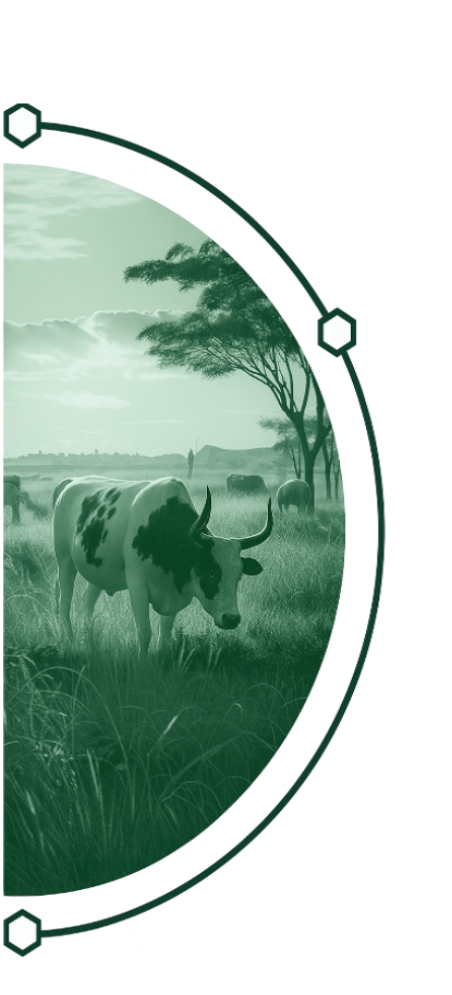
Intensive but brief grazing periods followed by long rest periods allow for soil regeneration, improving its structure, fertility, and carbon storage capacity.
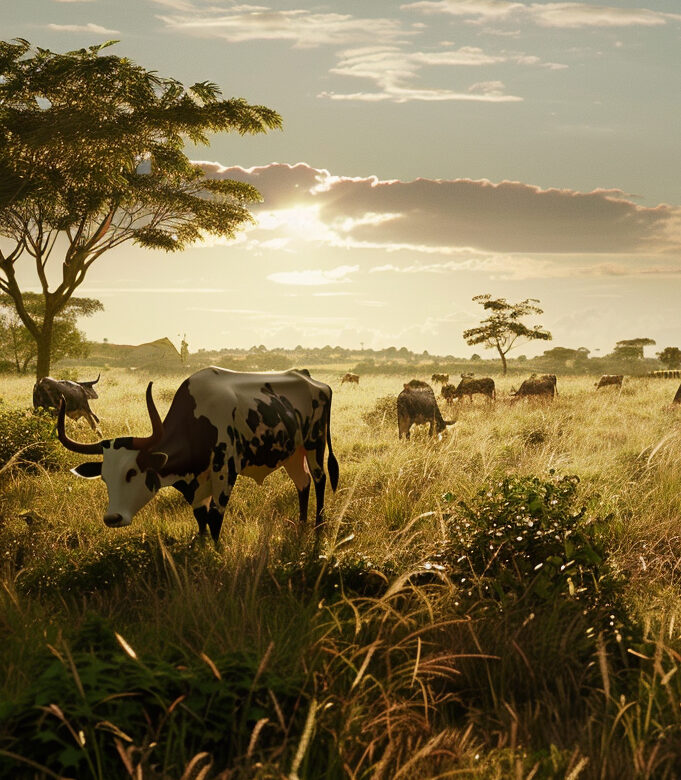
Welcome to WildeBeef, where tradition meets innovation in the heart of Uganda. Our project is at the forefront of transforming cattle farming into a powerful tool for ecological restoration and community empowerment. By implementing regenerative grazing techniques, we’re not only enhancing the fertility of the land but also reviving the vast, biodiverse savannahs of Africa. Join us on our journey to create a sustainable future where beef production supports environmental health and economic growth.
At WildeBeef, we envision a world where agriculture coexists with nature. Our initiative aims to reverse land degradation, boost biodiversity, sequester carbon, and elevate the living standards of local communities through sustainable beef production. Here, every cow contributes to the regeneration of the land, ensuring that Africa’s savannahs thrive for generations to come.
Restore your grasslands with our expert team. We’ll help you.
Team Lead
Diederick is a South African veterinarian, trained at the University of Pretoria’s faculty of Veterinary Science, who practiced in the United Kingdom for over 30 years. Diederick’s career in the UK has included running his own veterinary practice doing small animal clinical work as well as founding several other businesses in the UK’s agribusiness space providing a wide range of services such as statutory carcass classification services for meat and livestock, import and export inspections services for products of animal origin moving between the UK and the EU. Diederick also comes from a cultural farming background and has a strong interest in farming, nature and, particularly, cattle. This interest, along with key insights gleaned from his professional experiences, led him to founding WildeBeef and dedicating himself to activating cattle in the service of nature.
Technology Lead
Ernest is a Ugandan data scientist and actuary. He graduated from Michigan State University with a BSc in Mathematics and from Columbia University with an MSc in Actuarial Science before going on to work in New York. His 10+ years of professional experience have been at the intersection of data and software, mainly in insurance. These experiences gave him a deep understanding of how data-driven technology (blockchain and AI) is changing the industry. Coming from a cattle-keeping background in Uganda, he is especially excited about WildeBeef’s potential to benefit cattle-keeping communities socio-economically.
Ecology Lead
Jon is Director at RSK Wilding, a UK company dedicated to restoring nature. He set up Wilding in 2020 to use the UK’s Biodiversity Net Gain legislation to create a network of habitat creation and restoration projects, funded by developers. He also works with Nature Positive to help corporates improve carbon and biodiversity performance. Jon and RSK Wilding will play an independent 3rd-party assurance role to help WildeBeef evidence its environmental claims.
Technical Lead – Grazing & Veterinary Science
Gerhard is a South African veterinarian and farmer. He owns and runs a 2,965-acre family farm near Swartruggens, where he has lived since 2000. He is an expert in holistic grazing methods for cattle to regenerate land, having applied them on his farm for more than 10 years with excellent results. He also operates an IVF cattle embryo laboratory. At WildeBeef he will lead implementation of the regenerative grazing methods, including training and building a local practitioner team to scale the work.
Marketing Lead
Albert is a marketing consultant specialising in marketing communications, strategy and brand activation. He has worked with large corporates as marketing manager, project manager and creative director. His projects have included TV production, destination marketing (launching three city brands, including Durban, South Africa), corporate comms, public relations and sponsorships. He will lead WildeBeef’s marketing and branding efforts.
Food Scientist and Beef Cattle Rancher in Uganda
Martha has worked across East and Southern Africa to expand market access for food and agricultural products by supporting governments with SPS regulatory reforms and helping companies meet importing-country requirements. She was born into a cattle-ranching family in western Uganda and, together with her siblings, runs a beef cattle ranch. She now collaborates with WildeBeef and other ranchers to restore the Ankole cattle breed and build a high-value, sustainable beef brand for domestic, regional and international markets.
Restore your grasslands with our expert team. We’ll help you.
Every participant in the WildeBeef project can trace the journey of their beef from pasture to plate, verifying its sustainable credentials
Blockchain ensures that economic benefits are distributed equitably among farmers, landowners, and community members, reflecting their contributions accurately.
Secure, tamper-proof records mean that certifications for sustainability and fair trade practices are indisputable, enhancing market trust and value.
Streamlined processes reduce overhead costs, making sustainable practices economically viable at scale.
Regenerative Grazing Explained
Our adoption of mob grazing is not merely about cattle management; it’s a holistic approach to land rejuvenation. This method mimics the natural movement of wild herds, leading to:
Intensive but brief grazing periods followed by long rest periods allow for soil regeneration, improving its structure, fertility, and carbon storage capacity.
By managing grazing to emulate natural herd behaviors, we encourage diverse plant growth, providing habitats for wildlife and increasing ecosystem resilience.
Our practices aim to turn the savannah into a carbon sink, with studies suggesting significant potential for carbon capture in grassland ecosystems.
Intensive but brief grazing periods followed by long rest periods allow for soil regeneration, improving its structure, fertility, and carbon storage capacity.

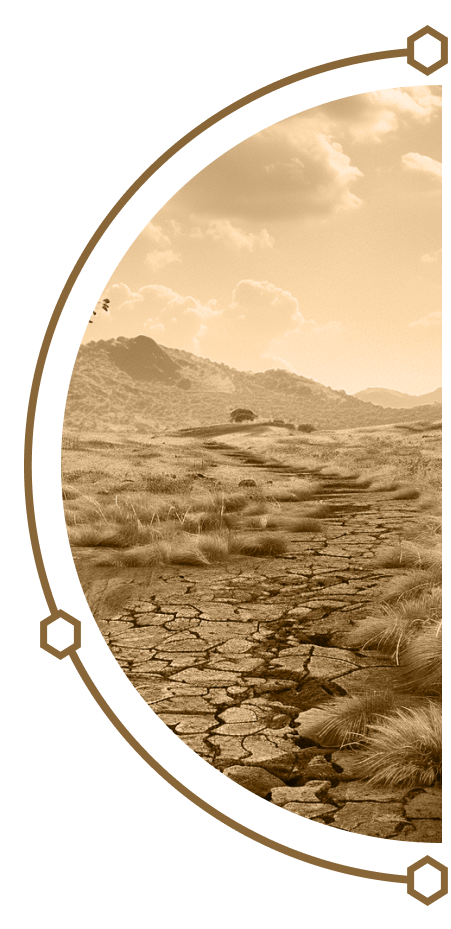
By managing grazing to emulate natural herd behaviors, we encourage diverse plant growth, providing habitats for wildlife and increasing ecosystem resilience.

Our practices aim to turn the savannah into a carbon sink, with studies suggesting significant potential for carbon capture in grassland ecosystems.
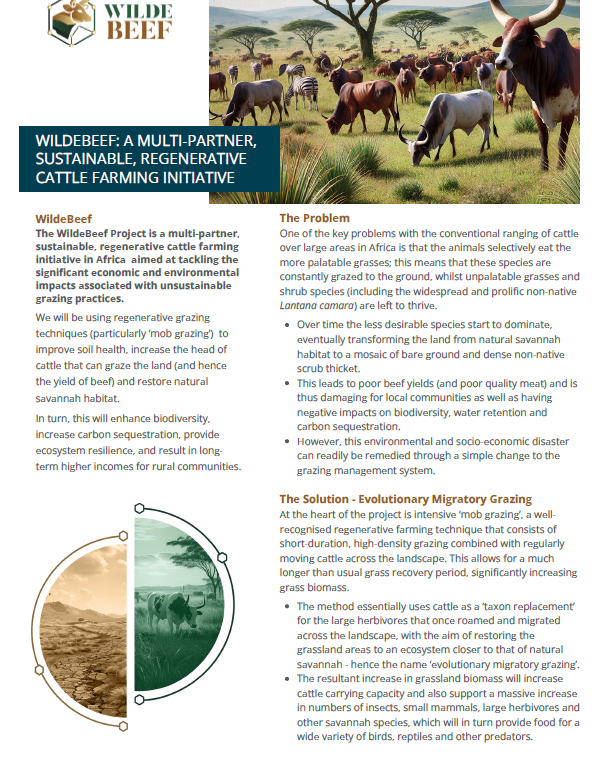
Through better yields and quality, coupled with access to premium markets, local farmers see substantial income improvements, fostering economic growth.
We monetize ecological benefits by selling carbon and biodiversity credits, providing an additional revenue stream that rewards sustainable practices
Ongoing research in collaboration with environmental scientists ensures our methods evolve with the best available science, maximizing our positive impact on the environment.
Most asked questions on the project’s goals, methods, benefits, and how they can engage with or support WildeBeef.
The WildeBeef Project is an innovative initiative aimed at restoring African savannah habitats through sustainable cattle farming, utilizing regenerative grazing practices and blockchain technology.
Regenerative grazing, specifically mob grazing, helps restore soil health, increases biodiversity, improves water retention, and significantly boosts carbon sequestration in the soil, thereby contributing to climate change mitigation.
Mob grazing involves moving large herds of cattle frequently across the land to mimic the movement of wild herds. This prevents overgrazing, allows for plant recovery, and promotes a healthier ecosystem.
Blockchain technology in WildeBeef ensures transparency, traceability, and equitable benefit distribution. It records every transaction and movement, ensuring that all stakeholders can trust in the sustainability and fairness of our operations.
Currently, we are focusing on building our local and regional markets, with plans to expand our export capabilities. Stay tuned for updates on international availability.
Carbon credits represent the reduction of greenhouse gases, and nature credits highlight biodiversity improvements. WildeBeef sells these credits to companies looking to offset their carbon footprint or invest in biodiversity, creating additional revenue streams that support our sustainable practices.
We combine traditional cattle breeds with internationally recognized beef varieties through careful genetic selection, alongside our regenerative grazing practices, to produce high-quality, sustainable beef.
Our project increases income for local farmers through higher beef yields and quality, provides training in sustainable practices, and involves communities in the cooperative venture, fostering socio-economic development.
We provide full transparency through blockchain, regular environmental impact assessments, and third-party certifications that verify our sustainable and regenerative practices.
While our focus is on sustainability and regeneration, we adhere to organic principles where feasible. However, certification might vary as we prioritize ecological restoration over strict organic labeling.
We welcome partnerships, investments, and support. Please contact us through our website for information on how to engage with or contribute to our project.
We're researching and implementing practices that naturally reduce methane, like improving cattle diet diversity, which studies show can lower methane production in ruminants.
The regenerative grazing techniques will not only increase the number of cattle that can graze the land, but will also improve soil health and, with the reduction in fencing, help restore the natural savannah habitat and enhance biodiversity.